A typical true colour composite is a combination of three images within the visible to produce a recognisable image. Whereas, false colour composites are an alternative representation of an image by assigning different parts of the electromagnetic spectrum that cannot be seen with the human eye to the visible spectrum (RGB). Many satellites are capable of measuring the spectral bands including the visible, infrared, thermal and panchromatic among many more. A false colour composite exploits these measurements and allows for an enhanced image analysis seen by the most common combination of NIR (R), red (G) and green (B). This will result in vegetation appearing red, as seen in the practicals through the analysis of Numbaa, due to its high NIR reflection from the spongy mesophyll tissue. However, there are many other band combinations that can be used (Campbell, 1987).

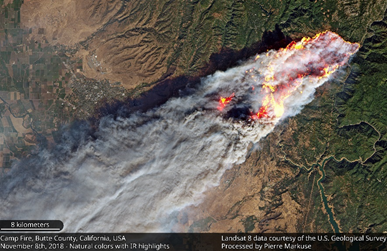
Equally, certain parts of the electromagnetic spectrum can be enhanced to reveal aspects of the image to be highlighted. One such example of this is an image enhanced by Pierre Markuse who used natural colour and infrared data from Landsat-8 to reveal the extent of the flames of the recent Camp Fire in California which would not have been so vivid in a true colour composite (Gonzalez, 2018).

 Remote Sensing Blog - 10153297