
Unlike many traditional sciences, remote sensing is relatively accessible and inherently practical, as found through the coursework tasks. A primary reason for this is the free availability of data from the opening of the Landsat archive and accessible information on the internet from organisations such as the European Space Agency. The publication of Landsat data in 2008 meant that the largest temporal record of Earth observation were open for the public to answer their own research questions (USGS, 2013). Remote sensing has developed from something abstract in the human imagination to something that can be incorporated into everyday life and seen consistently through the media.
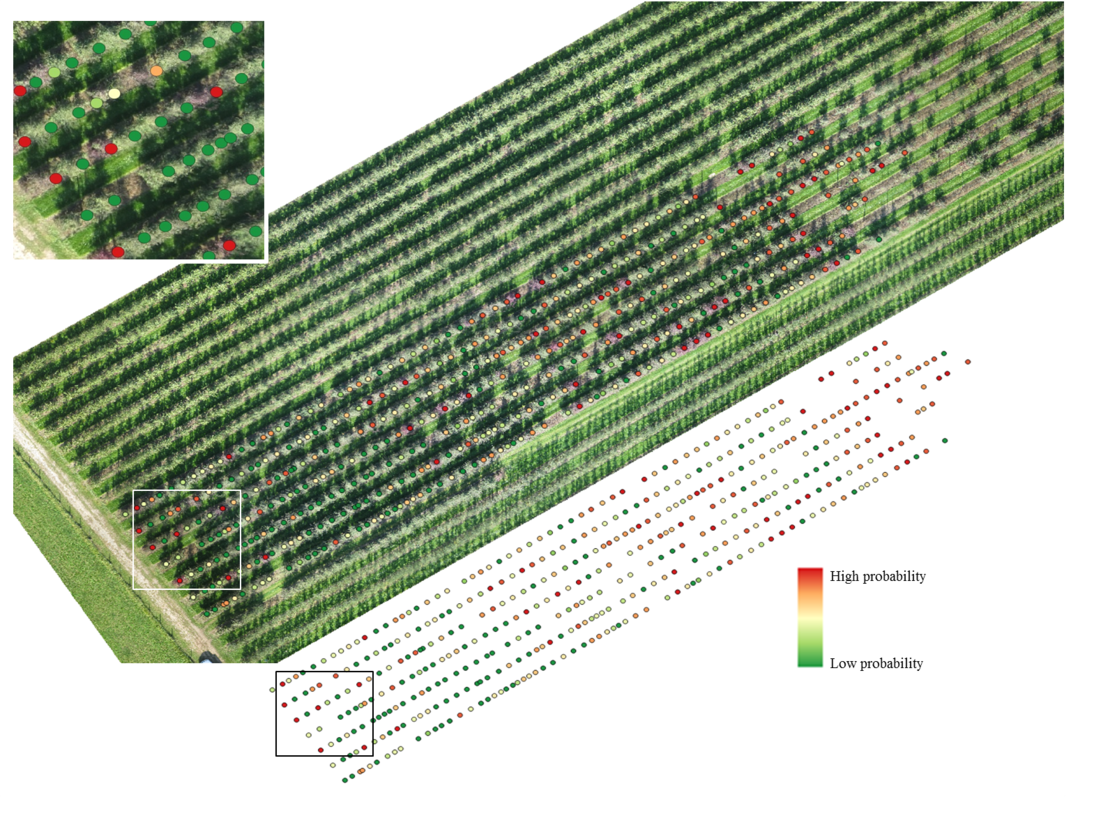
With advanced technology becoming more affordable, I have to wonder will drones be used more frequently to obtain data? Research from the European Space Agency highlighted the use of hyperspectral cameras on drones with a resolution of 4-5cm, primarily used for farming (European Space Agency, 2017). Early models including the ButterfliEYE LS has been used commercially for biodiversity and agricultural studies. Remote sensing may in the future be made more accessible as large-scale satellites may not be necessarily needed for small-scale local research questions. For example, hyperspectral imaging has more spectral bands in the visible and near-infrared, meaning phenomena such as crop disease can be identified more rapidly (European Space Agency, 2017).
While many people could now use Landsat imagery to enhance their practical or professional skills and made remote sensing less of an alien concept, there were still discrepancies. Roy et al (2010) argues heavily for a bias within remote sensing towards more developed countries; their report showed that there were limited users of Landsat data in Africa due to poor internet connectivity and infrastructure within the continent. While the academic community may benefit from high resolution images and data about our earth, it has be asked as how to benefit wider society. In 2017 India launched a 3000kg satellite for the price of $5 million, However, is the new ‘space race’ beneficial for everyone? It may be hard to justify satellite expansion with stark economic inequalities (BBC, 2017).
Moreover, perhaps a more pressing issue is the lack of education many face; admittedly, remote sensing was never highlighted throughout my education as a source for research and employment. Perhaps if there is more awareness from secondary school level, the trajectory of student’s education may change in an increasingly growing sector. There is also a copious amount of ‘space junk’ which could damage satellites or spacecraft already in orbit for modern missions (NASA, 2013).

 Remote Sensing Blog - 10153297